
Skin biology
GHK-Cu and collagen: what research says about skin biology
The copper tripeptide GHK-Cu appears in the literature linked to extracellular matrix signaling. A sober look at what studies observed—and what they have not confirmed.
Source: Revisiones de biología dérmica y péptidos de cobre (2020–2024)
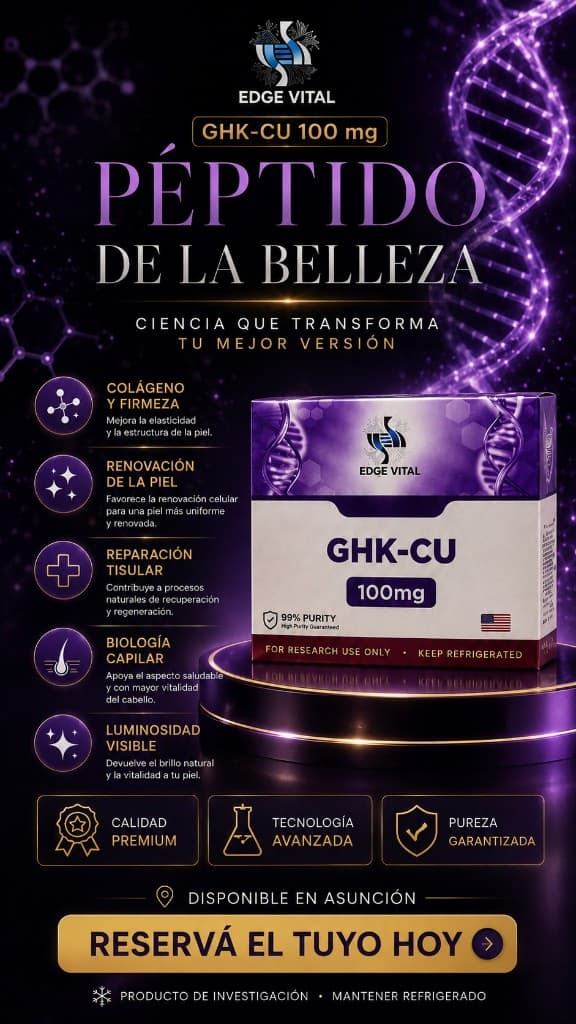
In cutaneous biology labs, GHK-Cu (glycyl-L-histidyl-L-lysine copper) has drawn attention for its relationship to pathways that regulate extracellular matrix components. This is not cosmetic hype: it is an investigation peptide whose signaling has been documented in cellular models and preclinical work.
Several papers associated GHK-Cu with changes in gene expression linked to type I collagen and enzymes involved in dermal remodeling. Findings remain preliminary and design-dependent, yet they help explain why the compound appears in skin-focused research catalogs.
Literature also notes interactions with tissue-repair processes and oxidative-stress markers in vitro. That is not a guaranteed clinical outcome in humans; it points to an active field in experimental dermatology.
For readers in Asunción, Paraguay, interest often grows when generic marketing is contrasted with published data. Critical reading asks: which model? Was there a control? Which endpoints did authors measure? That filter separates scientific curiosity from medical expectation.
Within the EDGE VITAL ecosystem, GHK-Cu is framed as research material tied to skin biology. The right register is science journalism for informed consumers: describe associations, do not diagnose or dose.
If you want to go deeper on this axis, you can check GHK-Cu availability at EDGE VITAL Asunción and review the catalog’s technical material before any laboratory or personal study decision.
Informational research-oriented content. It does not diagnose, prescribe, or replace professional health guidance. EDGE VITAL operates in Asunción with commercial advisory.
Article FAQ
Keep reading
biologia-pielGHK-Cu: the beauty peptide under a scientific lens
Beyond marketing, GHK-Cu appears in literature linked to extracellular-matrix signaling. A premium read for Asunción.
Read article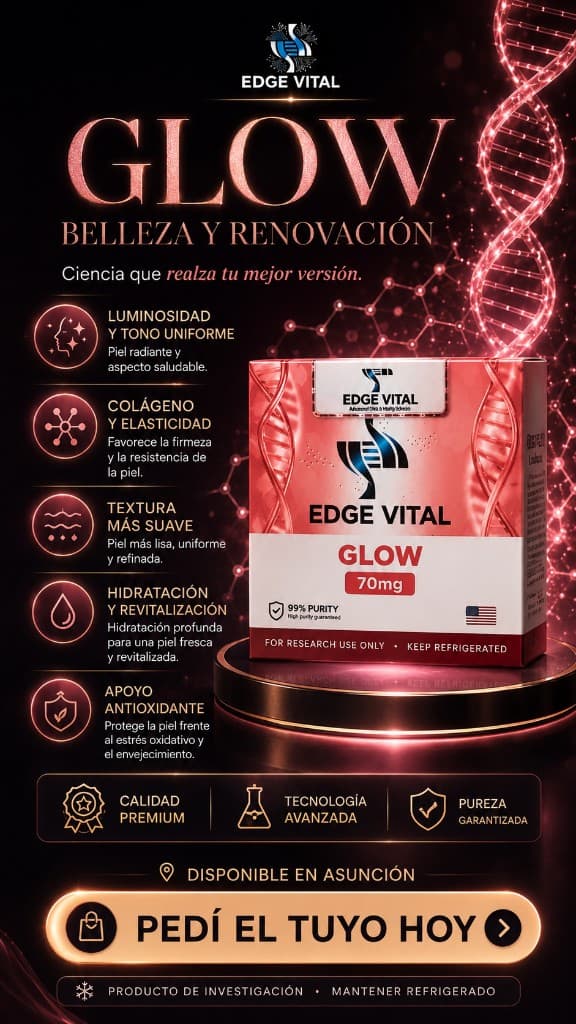 biologia-piel
GLOW: beauty and renewal in research language
GLOW connects aesthetic desire with sober scientific framing — as a premium research-oriented line.
Read articlebiologia-pielGLOW: peptide blends and the biology of skin “appearance”
GLOW groups peptide signals of interest in dermal research. We map the science without promising a “guaranteed glow.”
Read article